Firewatch: I played this for 5 hours straight.

This week I chose to play Firewatch, a game almost exclusively driven by the narrative. The tasks you must complete involve very little skill and are rewarded buy unlocking a new portion of the narrative. I personally really enjoyed it because these are the types of games I like to play. In fact, I enjoyed it so much that I ended up finishing the entire game in one day.  

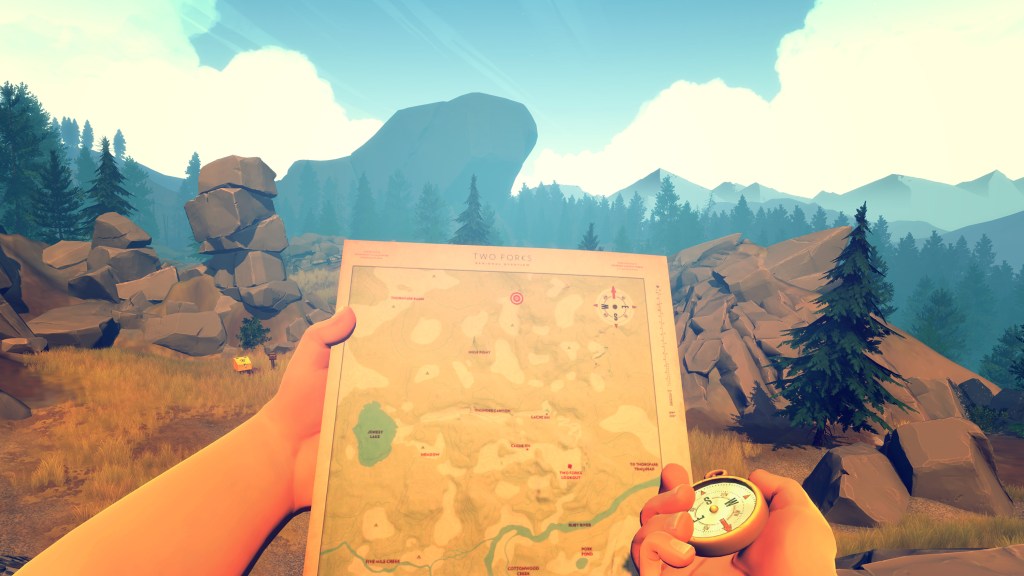
The first thing I’d like to touch on is the avatar vs character debate as brought up in the Shaw reading (Shaw, N/A). In Firewatch, because of the lack of customization, it can be concluded that Henry is a character and not an avatar. Also in this game specifically, you never actually see a person. Not your own character, not Delilah (despite conversing with her the whole game), and not Ned (even when he locks you in the cave). The only glimpse of humanity you see is your own character’s hands and occasionally legs. In class, we discussed the disparity between identifying with vs identifying as a character. In this game particularly it was hard for me to identify with the character I was playing as for a few reasons:

  1. I’m a young female and Henry is an older adult male
  2. The character design is more caracaturism versus the environment which is photorealistic
I also want to touch on a point that Shaw talked about, “Avatar-Player relationships can be quite powerful and self-referential in massively multiplayer online role-playing games.” (Shaw, N/A) This is a feeling I frequently experience when playing games, and also greatly experienced in playing Firewatch, despite the lack of customization. I found myself starting to look out for Henry, purposely choose options and routes that would be the safest for him, and consider what he would really say when looking at the dialogue. This kind of narrative game really pulls in the player to feel close to the characters.

Going back to class, we discussed Celia Pearce’s 6 narrative elements. After playing through Firewatch, I see strong alignment with #6, or ‘the story system’. This game has no outright rules besides mechanically. The player is instructed of what to do and not do by the narrative of the game. Thinking about it now, I really could go wherever I want and explore wherever I want in the forest in Firewatch but I don’t. Why? Because by following the unspoken rules of where and what my character is supposed to be doing, I get rewarded with pieces of the narrative puzzle. 

Overall, this game is a perfect example of narratology and its effect on the player and they interact with the game world.
Shaw, Adrienne. Gaming at the Edge: Sexuality and Gender at the Margins of Gamer Culture.
Journey: This Game is Prettier Than You

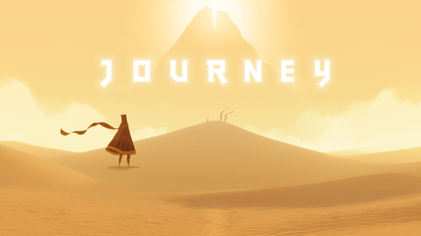
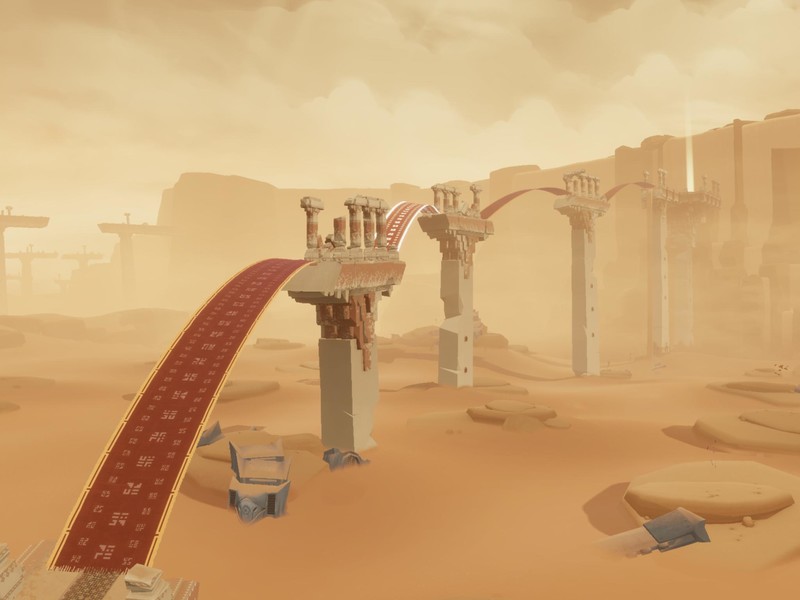
This week I played Journey, which was one of the most beautiful video games I have ever encountered.

The discussion around video game aesthetics is quite tired, most of it pertaining to the author’s bias about whether or not video game graphics can be considered an art form. It is my opinion that they undeniably are, especially when looking at the beautiful animations like those seen in Journey. The article by Simon Niedenthal that we read for class has 3 definitions for game aesthetics: 

  1. The sensory phenomena that the player encounters in the game 
  2. The aspects of digital games that are shared with other art forms 
  3. The game experience as pleasure, emotion, sociability, formgiving, etc. 

(Niendenthal 2009)

Personally, I think “aesthetics” can refer to all 3 at the same time. One quote from this article I really liked was, “Where hands, senses, bodies and the tangible qualities of games meet, the aesthetic meaning of games emerges.” (Niendenthal 2009) This definition is especially applicable to Journey because there’s a truly multi-sensational dynamic that all comes together to mold the unique aesthetic of the game. 

Speaking of which, let’s talk about Journey. Wow. This game is incredibly beautiful and also incredibly interesting. It manages to mold photorealistic illusionism with caracaturism almost seamlessly. You would think something like this would make the visuals a bit conflicting, but it’s incredibly simple. Actually, the first thing that perplexed me about this game was the minimal controls. I had a unique experience where rather than playing with a controller, I played on an iPad, which just enhanced the minimalistic structure of the game. There is an ability to jump, crouch and move around by moving your finger in the direction you wish to go. The simplicity of this almost complicates it when you realized there aren’t special moves or motives.

That’s the other interesting thing about this game: no rules. I mean of course there are rules and boundaries, but they are completely unwritten. This lack of direction is really efficient in motivating the player to keep going. You don’t know what you’re going towards or why you’re going there, but you want to find out, and that keeps you in the game.

Visually, there is no doubt this game is appealing, but it’s also the unique soundtrack that adds to the gameplay. The sound was mostly non-diegetic but was occasionally dynamic (Collins 2008). I think that the music in this game was mostly used to direct the structure of the game, escalating the drama where dialogue could have. It emphasizes the simplicity of the storyline while somehow increasing the intensity a small amount. The middle-eastern style of the music also matches well with the desert scenery of the game. Overall, complimenting the game in every way.  

citations

Niendenthal, Simon. “What We Talk About When We Talk About Game Aesthetics.” Authors & Digital Games Research Association , 2009.

Collins, Karen. “Game Sound.” The MIT Press, 2008.

Portal 2: Just Enough Rule Breaking

Portal 2 was an excellent game to play for this unit due to the fact that the main objective of the game relies on the defying usual “graphical logics” and breaking mechanical rules using said Portals. According to Sicart’s article, he defines game mechanics as “methods invoked by agents, designed for interaction with the game state”. Essentially, this can be boiled down to how the player makes the game work or in some cases how the game makes the player work. 

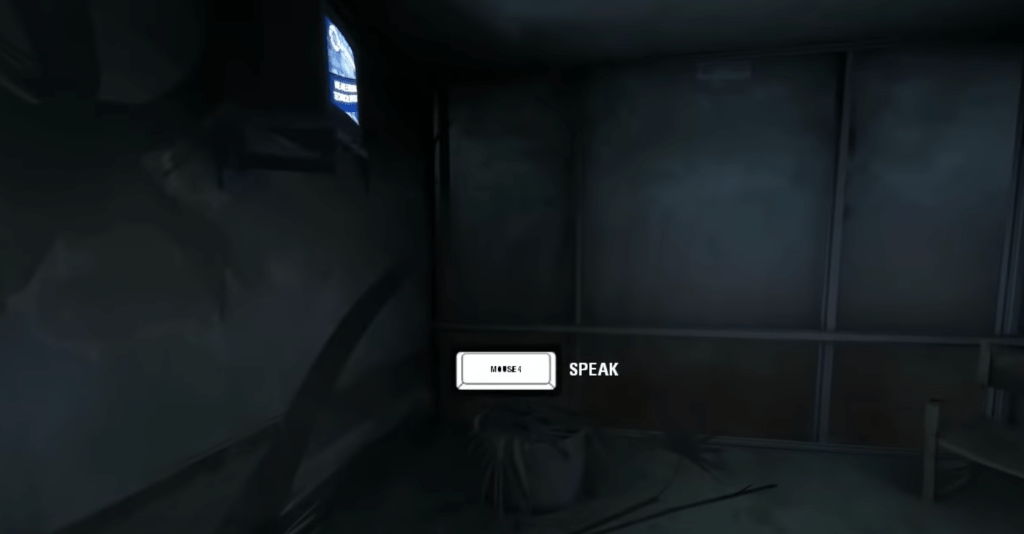
In many cases, the game manipulates the player into following the rules of the game using instructions or simply preys on the players reflexes. This is something that Portal 2 does a lot in the beginning, often instructing the player to press a button or move somewhere and promising something in return, yet having that action do something else completely. Like at the start, the little robot instructs you to press the spacebar to speak, when in actuality spacebar works to jump. In these cases, this is more to fuel the narrative storyline than the actual gameplay, but it’s an example nonetheless. In class, we discussed some advice: that to find out what to do to cut down on time [for speedruns], think about exactly what the designer of the game would want you to do at that point and do the opposite. Sometimes following the mechanics of the game will actually slow you down. 

 In class we also talked about mechanics and rules and how they are expressed in the sense of 5 categories of “Graphical Logics”. 

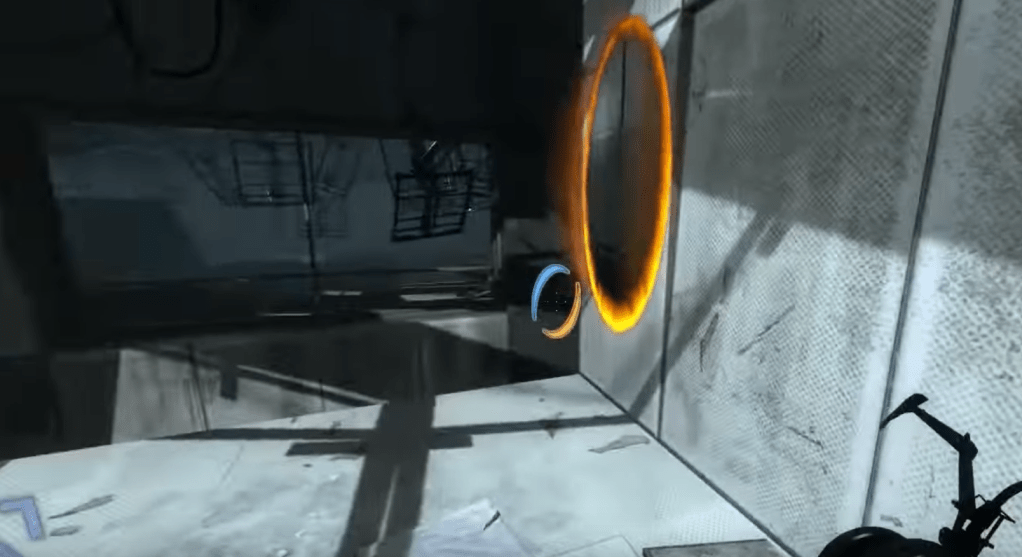
The categories include collision detection, movement, navigation, physics, and pattern matching. These categories are essentially focusing on the surroundings/world of the game and how the player is able to interact with them. For Portals 2, the world essentially functions as the real world does as far as physics and player movement goes. You will fall if there’s no ground, you cannot walk through walls, etc. The exception to this rule, however, is when you are using the portal gun. Now, the portal gun is largely the main point of the game, yet it also completely bends all the original graphical rules of the game. It allows the player to transport themselves around to complete the tasks that will allow them to escape the facility that would otherwise be impossible without it. The puzzle of how and where to place these portals is the main mental stimulation of the game for the player. The realism of the game world allows this fantastic element of a portal gun to bend the laws of physics just enough to make it common sense for the player.

Pac-man: The Game Your Dad Probably Played (And So Did You)

According to Richard Rouse’s analysis of classic arcade games, there are certain traits a game of that time was known to possess should it be popular. Pacman is a perfect example of this classic arcade model for the following reasons:

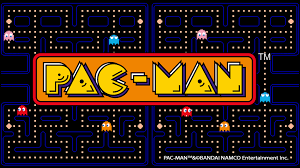
  • Single Screen – The entire world of gameplay is visible on one screen for the whole duration of the game.
  • Infinite Play – Assuming the little ghosts don’t catch up to you, you could theoretically play forever and just keep increasing levels. 
  • Multiple Lives – For a little wiggle room, you get 3 chances to die before the game is really over.
  • High Scores – The game continues endlessly but the score increases the longer you’re able to survive.
  • Simple Gameplay – You move the character around, avoid the ghosts, and eat the dots. Couldn’t get much more simple than that.

Another characteristic mentioned in the article is the lack of storyline of these classic games, which is a tenant Pacman definitely has. While you know the character (Pacman) and his objectives (eat the small dots, avoid the ghosts, or eat the big dots and banish the ghosts temporarily), there is no context or long term narrative. Why are the ghosts chasing Pacman? Why is Pacman in the maze? Why must Pacman eat the dots? These are all questions that are not important to the gameplay or objectives, so they remain unanswered. 

Due to the lack of friends who were willing to accompany me to a local arcade, I ended up playing this at home on PC. Overall, there is definitely a different experience when it comes to playing this game on a PC versus on a large machine in public. The controls used for the game are part of the gameplay, which Rouse also talks about this in his article, calling it “input”. Input is determined by the game designer, who is responsible for making the gameplay as smooth as possible using the designated controllers. The controls you use on your computer (up, down, left, and right key) are much more difficult to use than the joystick on the original console because they are closer together and require more coordination than simply moving your hand in the direction you wish to travel. 

There’s also the fact of your friends or the general public, really, watching you at an arcade that somewhat heightens the intensity of it. This is something that is not mentioned in the article but that I feel definitely changes the gaming experience. Think about the ambience of a typical arcade. The loud music, the people chattering, the neon lighting. It’s a lot different than playing alone in your room and heightens the intensity of the experience. It also probably increases the anxiety to do better (since there isn’t any winning in the game, only progressing). Either way, it is understandable why the simplicity yet competitive atmosphere made this game last through the decades.

Citation:

Rouse, Richard. “Game Analysis: Centipede.” The Game Design Reader.

Design a site like this with WordPress.com
Get started