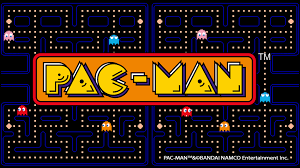
According to Richard Rouse’s analysis of classic arcade games, there are certain traits a game of that time was known to possess should it be popular. Pacman is a perfect example of this classic arcade model for the following reasons:
- Single Screen – The entire world of gameplay is visible on one screen for the whole duration of the game.
- Infinite Play – Assuming the little ghosts don’t catch up to you, you could theoretically play forever and just keep increasing levels.
- Multiple Lives – For a little wiggle room, you get 3 chances to die before the game is really over.
- High Scores – The game continues endlessly but the score increases the longer you’re able to survive.
- Simple Gameplay – You move the character around, avoid the ghosts, and eat the dots. Couldn’t get much more simple than that.
Another characteristic mentioned in the article is the lack of storyline of these classic games, which is a tenant Pacman definitely has. While you know the character (Pacman) and his objectives (eat the small dots, avoid the ghosts, or eat the big dots and banish the ghosts temporarily), there is no context or long term narrative. Why are the ghosts chasing Pacman? Why is Pacman in the maze? Why must Pacman eat the dots? These are all questions that are not important to the gameplay or objectives, so they remain unanswered.
Due to the lack of friends who were willing to accompany me to a local arcade, I ended up playing this at home on PC. Overall, there is definitely a different experience when it comes to playing this game on a PC versus on a large machine in public. The controls used for the game are part of the gameplay, which Rouse also talks about this in his article, calling it “input”. Input is determined by the game designer, who is responsible for making the gameplay as smooth as possible using the designated controllers. The controls you use on your computer (up, down, left, and right key) are much more difficult to use than the joystick on the original console because they are closer together and require more coordination than simply moving your hand in the direction you wish to travel.
There’s also the fact of your friends or the general public, really, watching you at an arcade that somewhat heightens the intensity of it. This is something that is not mentioned in the article but that I feel definitely changes the gaming experience. Think about the ambience of a typical arcade. The loud music, the people chattering, the neon lighting. It’s a lot different than playing alone in your room and heightens the intensity of the experience. It also probably increases the anxiety to do better (since there isn’t any winning in the game, only progressing). Either way, it is understandable why the simplicity yet competitive atmosphere made this game last through the decades.
Citation:
Rouse, Richard. “Game Analysis: Centipede.” The Game Design Reader.
 alysse writes about games